

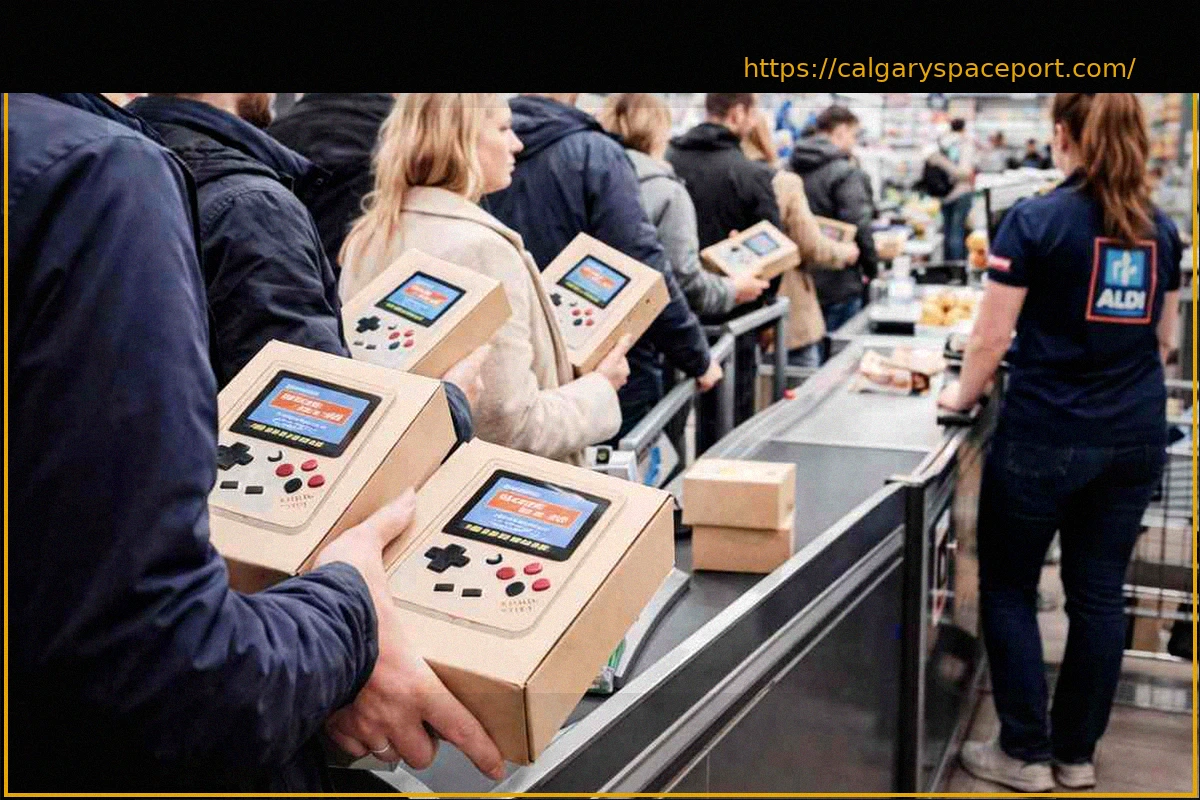
Imagine popping into Aldi for a loaf of bread and unexpectedly walking out with a miniature piece of video game history in your hands. An experience that, in today’s world, proves surprisingly common and highly appreciated.
Among the shelves dedicated to household products and weekly offers, a small device has appeared, sparking enthusiasm among nostalgics and anyone looking for a last-minute gift without breaking the bank. It’s not the original Nintendo console, but rather an alternative affectionately dubbed “famiclone” by collectors. Yet, its cost is so low it makes you doubt the price tag’s accuracy.
For less than twenty euros — a sum that today barely covers a decent aperitif downtown — you can take home a portable console with a generous 240 pre-loaded games. The retro-gaming fever has now transcended the specialized store boundaries, finding its place even among everyday necessities.
Aldi Offers the Perfect Gift for Everyone
The design of this console clearly winks at the Game Boy Color, with its vertical form factor that brings back memories of afternoons spent seeking the right light to view an unbacklit screen. Fortunately, here we find a 2.4-inch color LCD display that brutally honestly reveals every single 8-bit pixel.
There’s an almost hypnotic quality to the tactile feedback of its buttons: that slightly rubbery, somewhat uncertain bounce, typical of old, cheap remote controls. It’s a plastic sound far removed from the surgical precision of modern controllers, but one that instantly transports you to an analog and genuine dimension. It’s the triumph of “poor silicon,” which doesn’t need to run hyper-realistic graphic engines but just a handful of sprites jumping over colored blocks.
Many overlook that we don’t buy these gadgets to seriously play all 240 titles, most of which are obscure variations of nameless classics. We do it because in a world dominated by cloud subscriptions and infinite digital libraries that only generate choice anxiety, this discount “Game Boy” offers the luxury of finitude. It’s an object with a beginning and an end, requiring no day-one updates, and functioning even if our home Wi-Fi decides to give up. It’s a technological free zone where the frustration of a glitch becomes part of its charm, not a reason to open a support ticket.
While industry giants compete with 8K resolutions and imperceptible latencies, Aldi puts the exact opposite on the table: the joy of low fidelity. Bringing it home means accepting an aesthetic compromise, but gaining a guaranteed conversation starter at the next coffee with friends. The success of this device lies in its ability to be an honest, unpretentious, and incredibly democratic toy. No guides or YouTube tutorials are needed to figure out how to jump or shoot; just a right thumb and muscle memory that never ages.
It’s not just an impulse purchase; it’s a test of our technological resilience. We’ll see how long it takes before the device ends up buried in a drawer, but for now, the queue in front of the offer basket suggests that the appeal of low-cost pixels is far from waning.