

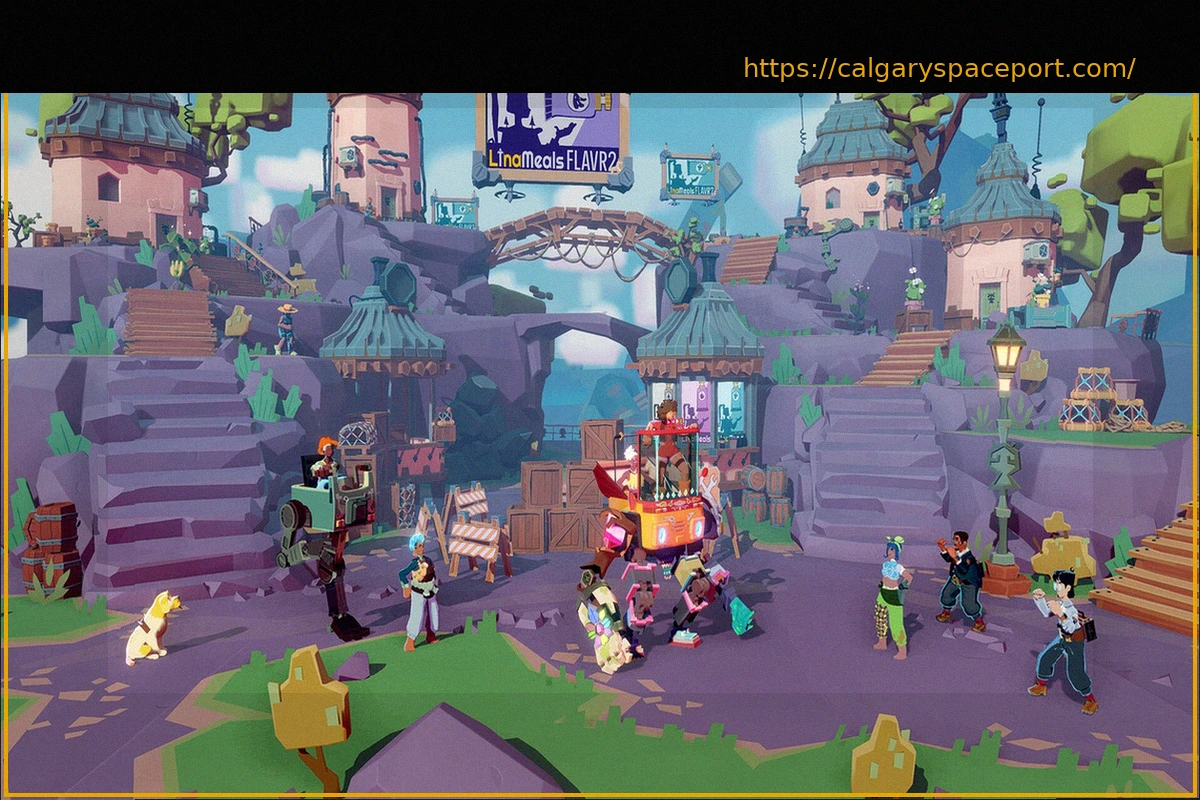
From a broad perspective, Dosa Divas by Outerloop offers many reasons to appreciate it. It presents an emotional story about reconnecting family bonds, incorporates a culinary suite through mini-games, and features turn-based combat that demands focus but isn’t overwhelming. This indie adventure is supported by excellent pillars, including an art style that pays homage to the project’s South Asian inspiration. However, Dosa Divas also feels like a product of its own potential, as each of these promising areas lacks the necessary finesse and depth to elevate the overall project.
In essence, Dosa Divas is an interesting indie game with grand ideas that aren’t fully realized.
The game’s premise follows two sisters returning home after years away, seeking to mend family ties and past mistakes. The narrative substance at the core of the game is effective and serves as a solid foundation. The family’s love for cooking and food acts as the binding agent, holding everything together. Players travel through a few distinct locations, assist some locals, reunite with an old ally, and work to repair a relationship. All this happens while battling anonymous lawyers and executives employed by the story’s main antagonist. To summarize, the third sister of this prominent family, Lina, has established a soulless food empire that prioritizes profit margins over the heart and soul of cooking. Her expansion and business growth have strained the environment. It’s up to the protagonist sisters, Samara and Amani, to dismantle this fast-food empire and show Lina once again why people should live to eat, rather than simply eat to live.
Narratively, this all functions effectively, though it can occasionally be a bit over the top. While it serves as a vehicle to drive the story forward, some of the more bizarre elements, such as god-like cooking mechs, are less impactful due to the narrative’s slight lack of finesse in explaining them. The voice acting is commendable, and the story doesn’t drag with unnecessary details. However, it could have benefited from a more engaging form of storytelling than simple character pop-ups with voice dialogue beneath them.
When it comes to gameplay, this is where the majority of half-baked grand ideas come into play. Dosa Divas generally doesn’t do anything wrong; it just lacks that brilliant idea executed in a way that commands admiration. Combat utilizes a turn-based strategy system where, each turn, your party of three and up to three enemies attack once. There’s a basic typing system, tied to the ‘flavors’ of the cooking mechanics. Enemies have various typings, and by matching your attacks of the same type, you can ‘fill’ an enemy, essentially stunning them for a few turns. To top it off, there’s a parry mechanic similar to Clair Obscur: Expedition 33, where you can neutralize enemy attacks by synchronizing your blocks at the right second. On paper, there are quite a few ideas that we know can work harmoniously together. However, in Dosa Divas, each is presented in its most rudimentary state. Again, it’s not a bad choice; it simply means the various mechanical ideas lack punch, and none of them stand out or impress. You end up just going through the motions, never truly contemplating your approach to each combat scenario, as you know the game won’t punish you for a poor decision or an unintended action.
Then there’s the cooking system. It’s based on a resource-gathering element. You explore four small levels, collect ingredients found in designated spots, or purchase more exotic items from a merchant. These ingredients are then used to complete set recipes. Cooking involves inserting the correct ingredients into a recipe, completing quick WarioWare-style mini-games (of which there are only about five), and then using the dish to fulfill orders (side quests) or as a healing item in combat. Again, from a general perspective, this all works. However, it’s also implemented so basically and simply that it never leaves an impression or highlights a core design mechanism or choice as the defining element of the gameplay.
For me, that’s the whole story of Dosa Divas. It’s a game with moments of quality marred by ideas that are merely incorporated. There’s a leveling and attribute upgrade system that doesn’t feel necessary. There are small levels to explore that offer little engagement beyond the main story. There’s a skill and progression tree that feels more like an afterthought than a key design element. You get the idea.
As a complete game, Dosa Divas doesn’t truly fall short. All the features Outerloop has incorporated function as intended. While there’s a bit of jank in movement and exploration, it’s generally a well-assembled game. However, it also feels like there could have been much more here, or rather, a greater focus on a few design features and the elimination of others to achieve a more refined creative vision. As it stands, Dosa Divas is an entirely acceptable game, but it had the potential to be much more.