

Diablo IV: Lord of Hatred: An In-Depth Review of the Latest Expansion
As a long-time fan of the Diablo series, having played since the mid-90s, I’ve always been captivated by its dark and foreboding universe. It’s remarkable that, nearly three decades later, the franchise remains relevant, and it’s an honor to review Diablo IV’s latest expansion, Lord of Hatred.
My extensive playtime in Diablo IV recently has given me clear expectations for what Blizzard Entertainment aimed to achieve with this expansion. While Blizzard’s communications suggest a “rebirth” for Diablo IV, implying a need for salvation, I’m not entirely convinced we’re at that point. Despite mixed reactions across various seasons, Diablo IV has consistently maintained a strong position, making Lord of Hatred’s arrival well-timed.
The expansion introduces new content, continuing the series’ signature dark, heavy, and ornate narrative style. This time, the focus is sharpened by Mephisto truly stepping into his role as the Lord of Hatred. A more central antagonist with a greater impact on the plot lends the story more weight than before. It’s still curious, however, that a game series named ‘Diablo’ has largely avoided featuring its titular villain. If you appreciate the current narrative direction of the game, Lord of Hatred will undoubtedly appeal to you. It boasts solid character development, engaging dialogue, and well-crafted cutscenes. While it might not reinvent the wheel or be a groundbreaking revelation, it offers a thoroughly entertaining experience from start to finish.
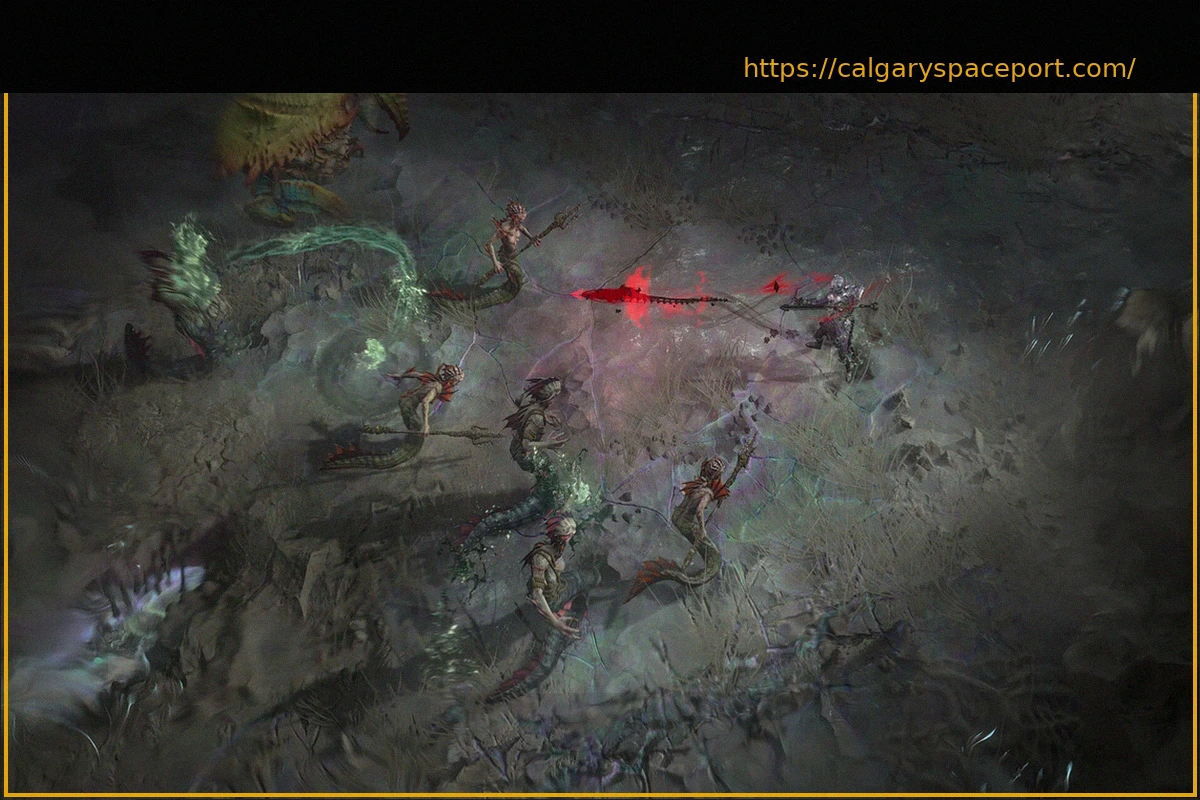
Much like the previous expansion, the core narrative and progression unfold in a new region, Skovos. This archipelago, located southwest of the main area, is visually appealing and injects a fresh aesthetic into Sanctuary without feeling like an entirely new game. Skovos is segmented into diverse and interesting biomes, ranging from lush jungles to volcanic landscapes, offering a significant visual departure.
While the visual direction is a clear and well-executed addition, the mechanics and structure become more complex. This is an evolution of the product, not a fundamentally new game. The core gameplay loop remains unmistakably Diablo: you know the drill despite new skills, spells, and strategies. You anticipate hordes of monsters descending upon you, your primary goal being to turn them into glittering loot. This loop remains satisfying, especially with the expanded systems for gear customization. You can spend an inordinate amount of time perfecting your equipment, only to find a superior item minutes later – a classic Diablo experience.
Charms have also been introduced, offering minor statistical bonuses. However, for players who have engaged with previous seasons, they feel more like an additional layer to existing mechanics rather than something entirely novel. While functional, they aren’t revolutionary.
The continuous addition of free content through seasons is a positive aspect. Yet, in some ways, Lord of Hatred feels slightly more… distilled? While there’s plenty of content, much of it will feel familiar to seasoned players. This reinforces the idea that the game isn’t being reinvented, for better or worse.
Blizzard has significantly altered the stat system, shifting from clear numerical values to percentages. I found this change perplexing, even after extensive playtime. I could equip gear, but I struggled to understand the underlying reasons for how individual stats impacted my gameplay. This lack of clarity is a notable issue in a game like Diablo, where understanding these mechanics is a significant part of the satisfaction. The game would benefit from better in-game explanations, perhaps with examples illustrating how percentage-based changes affect character performance.
Conversely, the skill system has seen significant improvement. It’s now easier to discern the connections between skills and their interactions, fostering experimentation without constant respeccing. Crucially, investing in a skill provides a tangible increase in character power, a hallmark of excellent Diablo design. The Paragon system also integrates more smoothly with the overall game, creating a more cohesive experience with clearer synergy between skills and Paragon points, which I personally appreciate for the meaningful sense of progression it provides.
The new classes are a welcome addition. I experimented with a Warlock, who manipulates dark forces, and a more traditional Paladin archetype. These classes offer great variety while maintaining the core Diablo IV feel, just with increased flexibility. Both new classes felt like a breath of fresh air, and their contrasting playstyles were enjoyable.
A noticeable shift is the increased focus on elite enemies and bosses as primary sources of valuable loot, diminishing the importance of regular monsters. This is a shame, as I always enjoyed the thrill of a random skeleton dropping something exciting. While a loot filter has been added to help manage drops, it doesn’t fully compensate for the diminished sense of discovery. The game features less overall loot compared to earlier periods, which is disheartening for a loot-goblin like myself. The emphasis has shifted to quality over quantity, but I miss the more abundant, sheer excitement of a loot explosion.
The endgame remains robust with the Abattoir of Zir, Nightmare Dungeons, and new activities like War Banners, where quest chains lead to rewards, and the Echo of Hatred. The content continues to expand with each expansion. However, I wonder if these additions feel too disparate, creating distinct pillars upon which the game rests. While versatility is a laudable goal, the game now feels more fragmented, possessing a multifaceted identity.
This isn’t entirely negative, as fishing has been introduced as a surprisingly effective way to acquire solid loot at your level. I enjoyed it, though my initial concern about content fragmentation persists. In Lord of Hatred, there’s a constant awareness of parallel and separate content “sections,” which can be distracting.
Another nostalgic touch is the return of the Horadric Cube, albeit in a new iteration. This classic Diablo feature taps into fond memories, though it, too, feels like an evolution of past mechanics rather than something entirely new. It can transform various in-game items into other objects. For instance, combining three helmets might yield a new one. This reduces item wastage and is a welcome callback to an iconic element.
Visually, the game has seen some enhancements. The graphics remain excellent, and the cutscenes are stunning, as expected from Blizzard, possessing a unique quality. The music is fitting, though I do miss some of the iconic themes from previous titles, particularly the distinctive atmosphere of Diablo II.
In conclusion, Lord of Hatred is a solid expansion offering substantial content for both new and returning players. However, it doesn’t quite deliver the major revitalization that some might have hoped for. It’s Diablo IV, simply improved, and at times, that’s enough.