

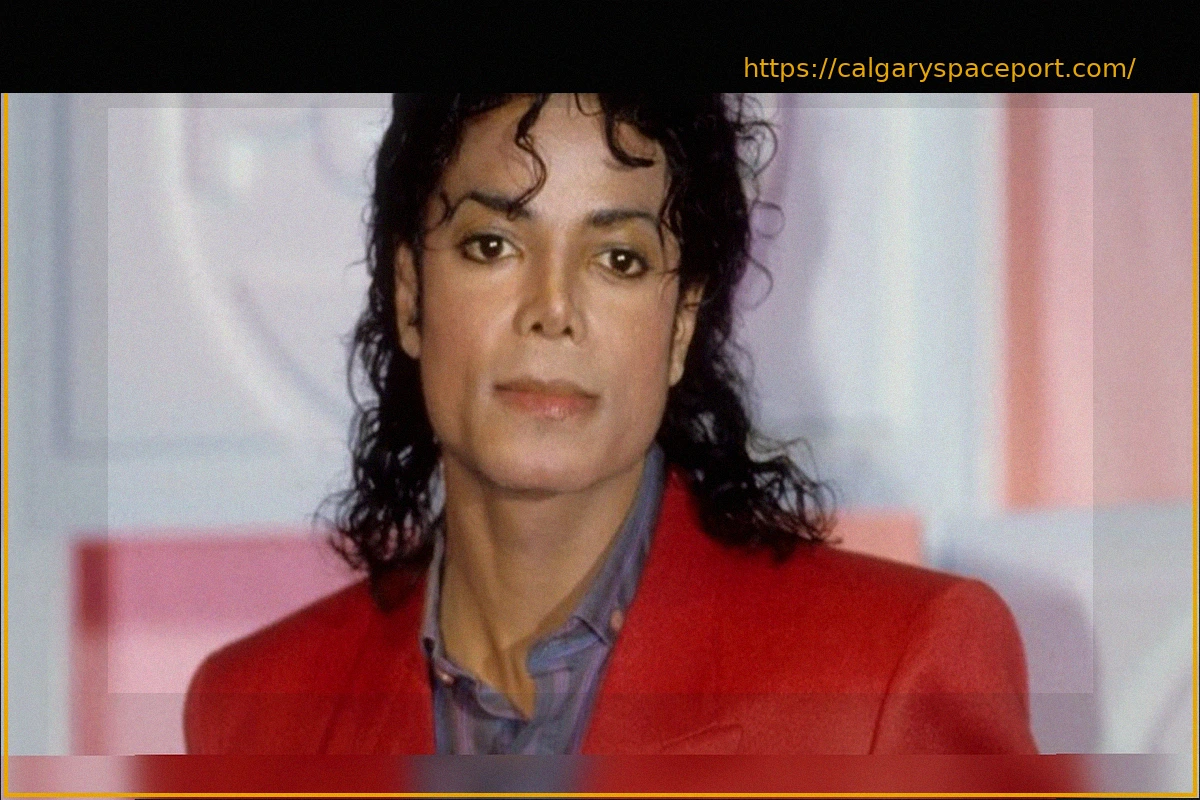
Michael Jackson, arguably the greatest music star ever, and certainly the greatest without a Hollywood biopic, now has his ‘mandatory cinematic event’ in IMAX, aiming to dethrone ‘Bohemian Rhapsody’ as the highest-grossing musical film. However, Michael Jackson was a profoundly complex figure, marked by controversy, including accusations of child sexual abuse. A film produced by his estate and starring his nephew, Jaafar Jackson, was unlikely to approach these sensitive issues with impartiality.
It appears the film, ‘Michael,’ avoids them altogether. Reports from Variety weeks ago indicated that the entire third act, which would have focused on the 1993 scandal and its impact on Jackson’s life and his polarized relationship with the media, was scrapped. The film makes no mention of these pivotal episodes.
Instead, ‘Michael’ presents Jackson as a divine being, a celestial gift to mankind. The film’s climax depicts him donating all proceeds from a settlement after a terrifying incident during a Pepsi commercial to a hospital’s burn unit. Throughout the movie, which only covers his early career up to 1984, Michael Jackson is portrayed as innocent, lovable, and flawless. This approach renders the film extremely superficial and, frankly, dull. By excising anything that could tarnish his image, the filmmakers have also removed the elements that would make him relatable as a real person, rather than an idolized figure with on-screen charisma but less depth than a music video star.
This wasn’t the original intention. According to Variety, filmmakers discovered late in production a clause in an agreement with one of Jackson’s accusers, Jordan Chandler, prohibiting his depiction or mention in any film. This led to the drastic overhaul. If the most significant scandal of his career, the very event that irrevocably altered his life and career trajectory, cannot even be mentioned, what is the point of the film? Furthermore, the film is intended to be the first of two parts. Given that it concludes with the Victory Tour in 1984, marking his departure from his brothers to pursue a solo career, there’s at least a partial justification for omitting the more dramatic, and certainly film-worthy, aspects of his life. Yet, even with the opportunity to focus on his formative years and develop him as a person before fame, ‘Michael’ fails to portray him with any significant depth.
The film’s most glaring flaw is its inability to imbue Jackson with any meaningful depth, even when given the chance to concentrate on his early life. The narrative fixates on the abusive relationship between Michael Jackson and his father, Joe, but this is developed in a superficial and predictable manner, propped up solely by Colman Domingo’s energetic performance. Joseph Jackson exists merely as the antagonist and the sole source of conflict, lacking any genuine character development. The film operates in stark black and white, avoiding any questioning of its characters or challenging the audience, which strips the movie of tension and interest. Its sole redeeming quality is the objectively brilliant music and well-executed musical numbers, including a recreation of the “Thriller” shoot. However, these are ultimately superfluous to the plot, serving only to showcase Jackson’s music and dance prowess, which is the film’s only genuine offering.
Beyond the father-son dynamic, the film neglects other crucial relationships, such as Jackson’s bond with his siblings, which is inexplicably ignored. While there are hints about his musical development and marketing deals, these are not adequately explored. The film also shies away from delving into Jackson’s true personality or private life. While this might be a respectful approach, avoiding speculation about a deceased individual, it fails to create an engaging character study. Ultimately, what remains is a collection of lengthy musical sequences and disjointed biopic tropes, lacking a cohesive narrative. There’s a notable absence of drama and emotional resonance, with characters presented as mere caricatures. Even the climactic musical performances, reminiscent of ‘Bohemian Rhapsody,’ feel gratuitous rather than a fitting culmination. Unlike the Freddie Mercury biopic, which earned its emotional climax through the (albeit fictionalized) reunion of the band, ‘Michael’ opts for a commercially driven strategy, exploiting Jackson’s talent with minimal artistic risk.
Ideally, a biopic, regardless of its accuracy, should offer insight into the real person behind the music, revealing their strengths and weaknesses, allowing viewers to accept or reject them. ‘Michael’ falls short, possessing the depth of a paper-thin facade. It becomes evident that the film’s primary objective is to capitalize on Michael Jackson’s legacy and music for financial gain, offering little of substance in return. The film fails to explore Jackson as an individual, reveal aspects of his personality, delve into his relationships with his siblings, or explain his rise to global superstardom. Its sole focus is a predictable, poorly written narrative of an abusive father-son relationship, which would have been a better suited as a subplot rather than the central pillar of the film. Even the well-executed musical numbers feel unnecessarily prolonged to meet the film’s runtime. While the second installment might offer improvements, the ‘Michael Jackson saga’ thus far appears to be a purely commercial venture with no artistic or historical aspirations.