

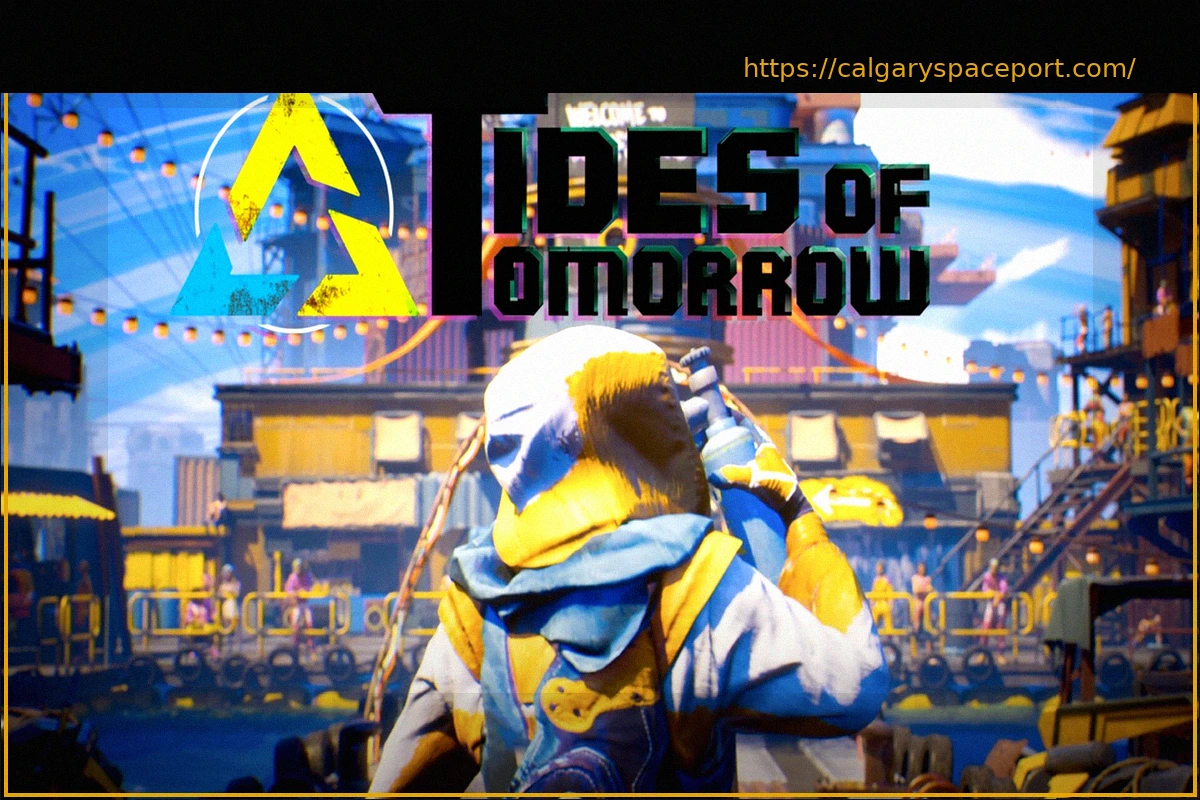
Following the acclaimed Road 96, developer Digixart is charting a new course with its next title, Tides of Tomorrow. Shifting from open roads to the high seas, this upcoming game maintains a strong narrative focus, emphasizing player choices and their impact on story progression.
Described as a ‘plasticpunk’ adventure, Tides of Tomorrow invites players to encounter peculiar characters and engage with them to shape not only their own journey but also the narratives of other players. With its release date nearing on April 22nd, we had the opportunity to speak with Digixart to delve deeper into this ambitious and eagerly anticipated project.
Below is our conversation with Game Director Adrien Poncet, where we discussed the recent development delay, the influence of the unique Story-Link feature on gameplay, the studio’s stance on artificial intelligence, the expected duration of Tides of Tomorrow, and much more.
Interview with Adrien Poncet, Game Director
Q: How did the recent delay allow you to improve Tides of Tomorrow?
Poncet: We were able to enhance many aspects! The additional time allowed us to improve the game’s polish and stability, thoroughly test our Story-Link scenarios, and refine the economic balancing. This is particularly crucial because the economy directly influences the story and player choices, as resource scarcity is one of the game’s central themes. As perfectionists, we also used this time to add new cutscenes, introduce more boat-based gameplay, and redesign some main characters, like Nahe, whom we felt wasn’t iconic enough.
Q: How do you balance player freedom while preventing them from inadvertently spoiling another player’s run via the Story-Link feature?
Poncet: We’ve noticed many players express concern about this! In fact, most Story-Link scenarios are handcrafted. It’s a complex web of possibilities, but with the core input of designers and writers. This allowed us to ensure that even players who choose a ‘troublemaker’ path will generate interesting and enjoyable scenarios for subsequent players. If a previous player acted poorly, it gives you an opportunity to rectify things and come across as the better person. Additionally, we’ve found a balance to ensure you always retain control over your own destiny. Simply put: another player will primarily impact your journey, not your ultimate destination.
Q: What are the sizes of the respective islands, and how much can exploration be expected to impact the time spent on each?
Poncet: The islands are quite substantial! You can expect to spend twice as much time on most islands if you decide to explore everything and talk to everyone. However, most exploration is optional: the critical path for each island is always story-driven, with branching paths dependent on your narrative choices, not purely on how you explore the location.
Q: How abundant are the medicines to combat the Plastémia disease? Will players be forced to choose between saving NPCs and themselves?
Poncet: As I mentioned, resources play a pivotal role in the game and its narrative. Medicine is quite scarce and becomes even rarer as you progress. You can buy it, steal it, find it through exploration, or acquire it via narrative events. After that, it’s entirely up to you what to do with it. You’ll need it for your own survival, but if you have extra, will you hoard it just in case? Will you leave some for other players or NPCs? And what happens if you don’t take enough for yourself? Tough moral dilemmas and significant consequences await!
Q: Can you align with the game’s factions, or are you more of a lone adventurer throughout the story?
Poncet: The player embodies a Tidewalker, part of a mysterious community rumored to originate from the ‘ancient world’. You can choose to play as a lone adventurer or forge strong bonds with NPCs and other players. Each faction has a different relationship with the Tidewalkers, which can evolve based on your own choices and the actions of previous players. You’ll find potential friends and allies within all factions (the Scavengers, the Marauders, and the Mystics), but it will be up to you to decide whether to cooperate with them or challenge them. You can attempt to unite everyone or permanently ruin a faction’s destiny! The game’s epilogues feature dedicated sections for each faction.
Q: What is Digixart’s approach to using artificial intelligence in its projects? Do you have a set of guidelines you adhere to?
Poncet: We have significant ethical concerns regarding AI. Our games contain no generative AI in the final product. We use some AI as a production tool, not for art (never!), but primarily for programming assistance or to automate time-consuming tasks like data analysis. We also utilized text-to-speech technology to have NPCs speak our dialogue lines during story iteration, before replacing it with actual voice actors!
Q: How long do you anticipate it will take to play Tides of Tomorrow?
Poncet: A single playthrough lasts between 10 and 15 hours, depending on how much you explore and how many optional levels you engage with. If you have less time and want to experience the main story, you can complete the game fairly quickly. But if you wish to dive deep into the game’s universe, uncover all secrets, and read all inspectable documents, you’ll have plenty to enjoy!
Q: Have you considered porting the game to the Nintendo Switch 1 or 2?
Poncet: The game is graphically more ambitious than our previous title, Road 96. We also utilize Unreal Engine 5 with Lumen and Nanite, which are not easily compatible with the Nintendo Switch. Therefore, we’ve focused on PS5 and Xbox Series for now.
Q: What element of Tides of Tomorrow do you think people aren’t talking about enough?
Poncet: We talk a lot about the Story-Link feature, as it’s the game’s main ‘novelty’. I believe we don’t discuss enough the real-world metaphor about ocean pollution that we try to portray in the game – primarily because society as a whole doesn’t talk about it enough! I also wish there was more discussion about our characters. It might be challenging to get to know them before the game’s release, but I personally find most of the main characters very compelling. We also have a gallery of eccentric secondary characters you’ll meet on your journey: someone living in a trash can, a bizarre fellow named BOMBI who spends his life crafting BOMBS atop a ruined tower, two siblings who divided their boat-kingdom in half and attack each other on sight… and many more. I call them the ‘plasticpunk weirdos,’ and it’s always a pleasure to encounter one of them. But you’ll have to discover them in the game!
Our sincere thanks to Digixart and Adrien Poncet for taking the time to answer our questions. Tides of Tomorrow is set to launch on PC, PS5, and Xbox Series X/S on April 22nd. Stay tuned for more coverage of the game!