Nothing Phone (4a) Pro Review
Nothing phones distinguish themselves through a unique approach to both software and hardware. The design, which combines aluminum with a semi-transparent aesthetic, is, in my opinion, superb. The Nothing Phone (4a) Pro, for example, maintains a slender profile and incorporates an aluminum unibody chassis, complemented by a vapor cooling system. Despite its futuristic and potentially delicate appearance, it boasts an IP65 rating, with Nothing even claiming to have tested it in 25 cm of water. A customizable 'Essential' button is located on the side; personally, I found it useful for quick screenshots.
Enhancing its originality, the Pro features a Glyph interface comprising 137 pixels illuminated by 3,000-nit mini-LEDs. The concept is to provide contextual information even before you unlock your phone. It's an intriguing idea, especially when paired with Nothing OS 4.1, though its functionality remains somewhat limited. Knowing that most users will primarily use it for time updates, I view it more as a fun little feature rather than dwelling on its theoretically greater potential. Life's too short for such worries.
Nothing OS truly sets itself apart from anything else on the market, and I absolutely love it. While its interface is distinct, it's remarkably intuitive. I particularly appreciate the enhanced privacy options, including a separate password for a secure "vault" where sensitive data can be stored, offering flexibility akin to the dual-SIM feature—often found only in high-end phones.
The 6.83-inch AMOLED display boasts a 1.5K resolution and a 144 Hz refresh rate, framed by exceptionally thin bezels (just 1.82 mm). Its brightness reaches 1,500 nits during normal use and peaks at an astonishing 5,000 nits, making it, I'm almost certain, the brightest screen I've ever tested. For gamers, the 2,500 Hz touch sampling rate even surpasses that of dedicated gaming phones. In short, it's bright, fast, and fluid. The speakers are also excellent. Oh, and a transparent case is included in the box—a practice that should be standard for all smartphones.
Powering the device is a Snapdragon 7 Gen 4 chipset, offering respectable 8-core performance, though it lacks Wi-Fi 7 support. The 5,080 mAh battery comfortably lasts two days and charges at 50 Watts. However, due to its metallic body, the phone does not support wireless charging. While I'm aware it's technically feasible, it was likely deemed too expensive to implement. I personally charge with a cable, but for those who have transitioned to a wireless lifestyle, this could be a significant drawback.
Nothing tends to somewhat undervalue its brilliant triple camera setup, which leverages its proprietary TrueLens engine. It features a 50MP Sony IMX896 main sensor, an 8MP Sony ultra-wide, and a 50MP Samsung JN5 periscope lens delivering 3.5x optical, 7x 'lossless,' and 140x ultra-zoom. While a few other phones might offer slightly superior overall image quality, none in this price range can beat its noise reduction when heavily zoomed. I'm less impressed, however, by the color calibration; I feel the three cameras don't quite match the default color profile, and there's a distinct difference between optical and digital zoom, even if the digital zoom is better than average. I still recommend avoiding digital zoom and sticking to optical, a piece of advice that holds true here. Unfortunately, the use of 'Ultra Zoom' (140x) powered by generative AI is a serious concern. This means some pixels in your image aren't genuinely captured but rather generated, which, in my opinion, belongs to post-editing, not image capture.
While the zoom capability receives significant attention, I'm actually far more impressed by its night photography performance. These night shots exhibit perhaps the lowest image noise I've ever achieved with a phone, which is quite impressive for this price bracket. The phone accomplishes this by combining seven images into one, then using AI to reduce noise. This is exactly how AI should be implemented in products! Despite this extremely powerful photo feature, the phone only records 4K at 30 FPS and cannot offer 60 FPS, a capability that, in my opinion, is crucial for effectively competing with flagship models from other brands.
Pricing is straightforward: €429 for the 8GB + 128GB version and €499 for the 12GB + 256GB model. The latter configuration will undoubtedly provide the best experience. Nothing promises three years of Android updates and six years of security updates.
My feelings are somewhat mixed. I appreciate the phone's metallic body and its feel in hand, but the semi-transparent, circuit board-like, futuristic aesthetic – what I love most about Nothing phones – is somewhat minimized here. The screen is superb and feels significantly more premium than what one would expect from a phone in this price range. I encountered no issues or lag while using it for gaming or intensive multitasking. Battery life is excellent, as is camera performance, at least when staying within the optical zoom limits.
It earns a solid 8/10. To elevate its standing, it would require 4K/60FPS video, Wi-Fi 7, improved optical zoom, and wireless charging. Still, I find myself somewhat in doubt, as I've fallen for its OS and the phone's overall aesthetic.
Fresh materials — Gaming News

Halo Ring World: A Veteran's Disappointment with the "Ugly" Redesign
Marcus Lehto, a veteran from Bungie and the art director for the original Halo: Combat Evolved, who was instrumental in shaping the iconic Master Chief and the original Ring World, has voiced his dissatisfaction with the current depiction of the Ring World in Halo: Campaign Evolved. He describe

El Niño Drives South American Seabirds Further North Than Usual in Panama
Unusual numbers of seabirds are being observed much further north than their typical range in Panama, South America, as El Niño significantly disrupts their food supply. These birds, including species like the blue-footed booby, normally reside off the coasts of Peru and Chile in cold, nutrient-r

Review of "The Last House": A Thriller That Misses the Mark
Summer is often accompanied by a new streaming horror film. I discovered "The Last House" a few days before its release and, even before watching it, suspected it was a typical concept—one that could either work or fall flat. With skilled direction and a solid script, it had the potential to be
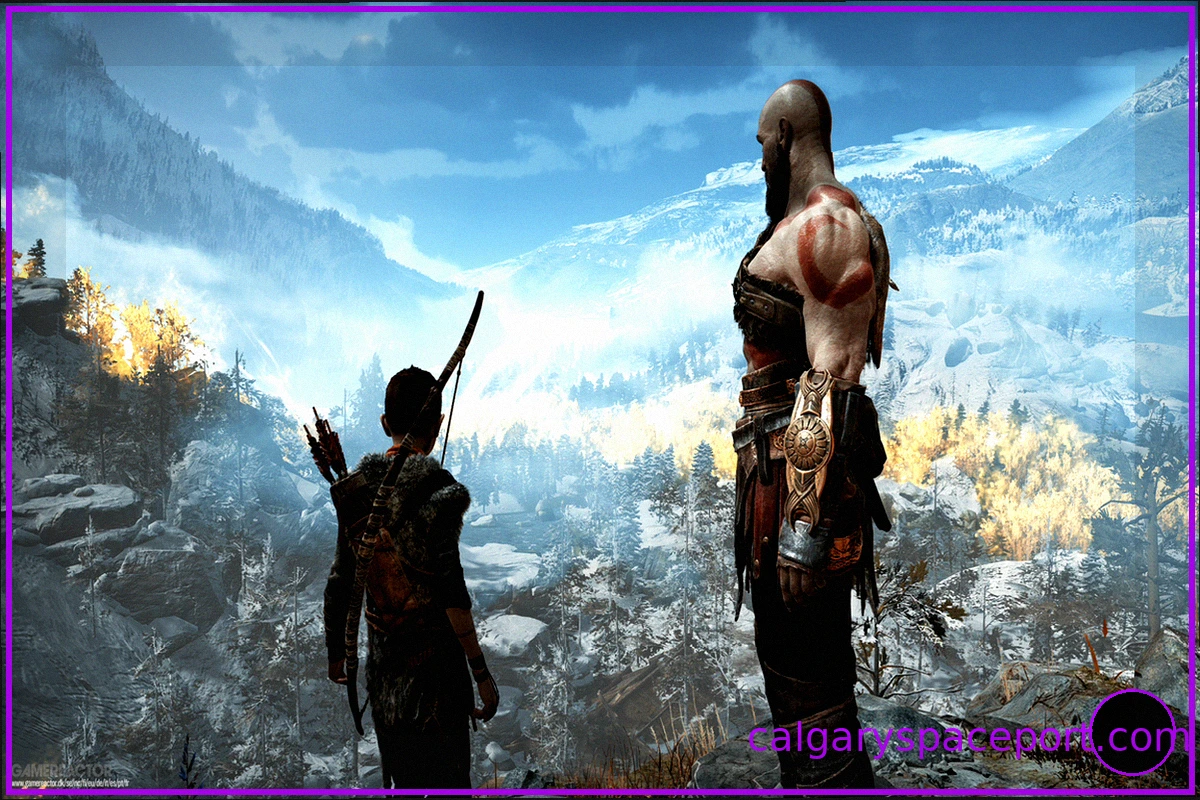
Christopher Judge, the Actor Behind Kratos, Calls for More Respect for Video Game Writers
Christopher Judge, the actor who brought Kratos to life in the 2018 game "God of War" and its 2022 sequel, "God of War: Ragnarök," has expressed a desire for video game writers and developers to receive the recognition and respect they deserve. During an appearance at FanExpo, Judge questioned

Tomb Raider: Catalyst Release Window Narrowed Down
While Lara Croft's return is anticipated next year with the release of Tomb Raider: Legacy of Atlantis on PC, PlayStation 5, Switch 2, and Xbox Series S/X on February 12th, it's clear Ms. Croft has even grander ambitions. A brand-new adventure, Tomb Raider: Catalyst, is also in development.

Halo Archive Lets Fans Relive Their Best Halo Memories, While Campaign Evolved Rekindles Nostalgia
As "Halo: Campaign Evolved" brings players back to where the legendary Xbox franchise began, nostalgia for the series' early, arguably golden years, has surged. But while fans are rediscovering that vast ring, another project offers a chance to revisit something far more personal: your own jou